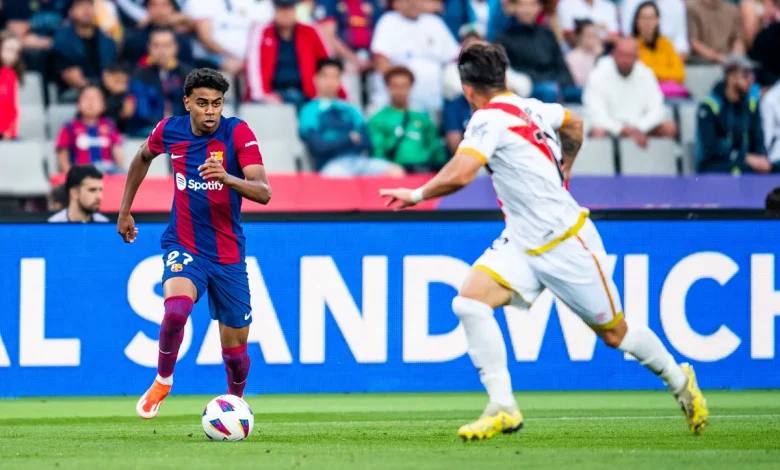
La Liga 2023/24 produced clear patterns in how matches unfolded across the first 45 minutes and the last 45 minutes, and those splits matter directly for betting. Once you treat each half as a slightly different game state with its own scoring tendencies and tactical behaviours, half‑time, HT/FT, and over/under markets stop feeling random and start reflecting a structure you can actually study.
Why half-specific data is a rational basis for betting
Halves are not just arbitrary segments; they reflect changes in fatigue, game state, and tactical risk that do not average out over 90 minutes. La Liga timing data show that goals are not evenly distributed, with certain 15‑minute windows and the second half as a whole often producing more scoring than early spells. This uneven distribution means that prices assuming “flat” goal risk across the match can misrepresent when goals are genuinely more likely.
Team‑level half tables capture another layer: some sides build leads early and then manage games, while others start slowly and produce much stronger results after the interval. Those tendencies create repeated patterns in first‑half result, second‑half result, and HT/FT combinations that are far more stable than individual scorelines suggest. Betting with that structure in mind turns trends into hypotheses about how a specific fixture might evolve.
What league-wide timing data tell you about La Liga goals
League‑wide timing statistics provide the baseline against which you compare individual teams. For La Liga, goal‑time breakdowns by 15‑minute segments show that scoring tends to increase after the break, with the 46–60 and 76–90 windows often among the most productive phases. Aggregating by half usually reveals a slight skew toward second‑half scoring, with around half or a little more of all goals coming after half‑time.
That pattern connects cause to outcome in a straightforward way. As fatigue builds, pressing intensity drops, spaces open between lines, and tactical risk rises when teams chase results, especially in the final 20 minutes. The impact for bettors is that late‑goal scenarios—second‑half overs, “goal after 70 minutes,” or live overs when a favourite is behind—rest on a league‑level tendency, not only on intuition about drama at the end of matches.
How team-level first-half and second-half tables reshape your view
Once you know the league baseline, team‑specific half tables show who deviates—and those deviations are where most of the betting edge sits. First‑half tables for La Liga 2023/24 rank teams by points gained and goals scored in the opening 45 minutes, revealing sides like Real Madrid, Girona, Atlético Madrid, and Athletic Club among the strongest early performers. In those matches, strong first‑half dominance often translated into more frequent 1st‑half leads and lower odds for “home/away to be ahead at HT.”
Second‑half tables tell a complementary story by ranking teams on post‑interval performance only. FootyStats’ second‑half table data show Barcelona and Real Madrid performing at a title‑contender level after the break, often outscoring opponents even in games where the first half was tight. That distinction matters: a club might look average on full‑time goal difference but repeatedly outplay opponents in the final 45, supporting bets on second‑half results, late comebacks, or “team to win second half” markets.
Linking half stats to HT/FT and goals markets
Half‑specific tendencies connect most directly to HT/FT and first‑half or second‑half goal lines. HT/FT stats and prediction sites highlight how often each La Liga team combines particular half outcomes—home/home, draw/home, away/draw, and so on—across a season. When that distribution aligns with first‑ and second‑half tables, it signals that the pattern is driven by consistent behaviour rather than random noise.
For example, a team that frequently draws at half‑time but wins full‑time is probably conservative early, then increases pressure or benefits from depth late; in such cases, “draw/win” HT/FT and “win second half” markets may be underpriced relative to generic odds. Conversely, sides that often start fast and then fade might support first‑half goal overs or HT results, but provide weaker justification for full‑time handicaps that assume 90 minutes of dominance. The key is tracing the mechanism—style, substitutions, fitness—behind the splits before committing to any pattern as sustainable.
Conditional scenarios: when half splits should change your plan
Conditional thinking prevents you from treating half stats as deterministic. If a typically strong second‑half team is missing its main bench impact players due to injuries or rotation, its historical record as a “late grower” may be less relevant for this specific match. Similarly, if a fast‑starting side plays away against an opponent that is exceptionally strong at home in first halves, their usual early dominance may not materialise. Integrating absences, fixture congestion, and tactical matchups with half stats is what turns raw numbers into genuine pre‑match edge.
Using tables to organise half-based betting insights
To make half‑specific analysis usable, it helps to turn descriptive stats into a simple framework that classifies teams by their typical first‑ and second‑half behaviours. By doing this, you create a structured lens for reading each La Liga fixture before you look at the prices.
A useful organisational table might look like this:
| Team type | 1st‑half pattern | 2nd‑half pattern | Practical betting focus |
| Early dominator | Strong 1H points and goals tables | Average 2H performance | 1H result/over bets, cautious FT handicaps |
| Late closer | Average 1H, strong 2H table | Frequent 2H comebacks and goal swings | 2H result markets, live overs when trailing |
| Slow and controlled | Low 1H and modest 2H goals both ways | Many tight scorelines in both halves | Unders for 1H, selective FT unders |
| Chaotic throughout | High goals in both halves, volatile metrics | BTTS and over trends across segments | Overs and “goals in both halves” propositions |
Interpreting teams through these lenses clarifies what each number is telling you. When you label a La Liga side as an early dominator, you are asserting that its tactics, pressing, and structure regularly produce first‑half control, which should translate into more 1H leads than average. By contrast, identifying a late closer implies tactical patience, strong bench options, and perhaps superior fitness, supporting a deliberate focus on second‑half markets and in‑play opportunities.
Applying first-half and second-half data from a data-driven betting perspective
From a data‑driven betting standpoint, half splits are most powerful when they sit inside a repeatable process rather than as occasional “fun facts.” Analysts often start by compiling league‑wide averages for first‑ and second‑half goals, then overlay team‑level stats for goals scored, goals conceded, BTTS by half, and points gained in each segment. By comparing each team’s profile to the league baseline, you can quickly see who is genuinely extreme versus who only appears so because of a handful of wild matches.
Next, those patterns are stress‑tested against context: opponent style, schedule congestion, injuries, and tactical trends from recent matches. Only when the half‑specific numbers, tactical logic, and external conditions point in the same direction does a bettor typically upgrade an angle from “interesting” to “actionable.” In this way, half stats become one layer in a multi‑factor model, not a standalone trigger that overrides everything else.
When half-based patterns mislead or break down
Even strong half patterns carry failure points that you have to recognise early. Sample size is one: a team’s first ten games might show an extreme first‑half trend that regresses toward the league average once 30+ matches are played. Fixture bias is another: if an early schedule stacks home matches or weaker opponents, that distortion can inflate apparent first‑ or second‑half strength before the calendar balances out. Betting heavily on those early patterns without checking who they were built against can lead to overconfidence and mis‑sized stakes.
Game states can also override historical tendencies. A red card in the first half, an early goal against a low‑block opponent, or a must‑win situation for one team can change risk profiles in ways that make past half splits less predictive for that particular match. In live betting, sticking rigidly to pre‑match half stats while ignoring fresh information—line‑up surprises, tactical shifts, injuries—turns what should be an advantage into a trap. The value of half‑specific data lies in how you adapt it, not how faithfully you repeat it.
Integrating half statistics in a sports betting service context (UFABET)
Once a bettor has identified how La Liga teams behave across halves, the way they execute those ideas depends on how they interact with their chosen sports betting service. When exploring markets on ufa168 มือถือ, an organised user might begin by scanning upcoming fixtures for mismatches between a team’s first‑half trends and the posted 1H goal lines or HT result odds, then separately assess whether second‑half and full‑time prices reflect the known patterns of late surges or collapses. By mapping each potential bet to a specific half‑based mechanism—strong early pressing, heavy reliance on substitutes, or repeated late goals—they turn a general service menu into a structured set of options tailored to when in the match their statistical edge is strongest.
How half-based football thinking sits alongside a casino setting
In a broader environment where football markets share space with a casino online offering, half‑specific La Liga analysis highlights a fundamental difference between information‑driven and purely probabilistic games. Studying first‑ and second‑half trends, HT/FT distributions, and timing of goals allows bettors to form testable beliefs about how probabilities vary across the 90 minutes, which they can then try to exploit. Casino outcomes, by design, lack that evolving structure: each spin or hand follows fixed rules and house edges that do not respond to form, fatigue, or tactical shifts. Recognising that distinction prevents the mistaken assumption that an edge built from half statistics in football automatically carries over into casino games, reinforcing the idea that information matters in one setting and discipline around variance dominates in the other.
Summary
Using first‑half and second‑half statistics in La Liga 2023/24 betting means treating each 45‑minute segment as its own tactical and probabilistic environment rather than slicing a 90‑minute match in half. League‑level timing trends, team‑level half tables, and HT/FT distributions together reveal which sides consistently start fast, grow late, or keep both halves tight, and those patterns become most valuable when aligned with context on injuries, congestion, and tactics. For data‑driven bettors, the real edge lies in embedding these splits into a repeatable process—using them to decide when and where on the timeline to take positions—while keeping a clear boundary between information‑sensitive football markets and other gambling products that do not reward this kind of granular analysis.