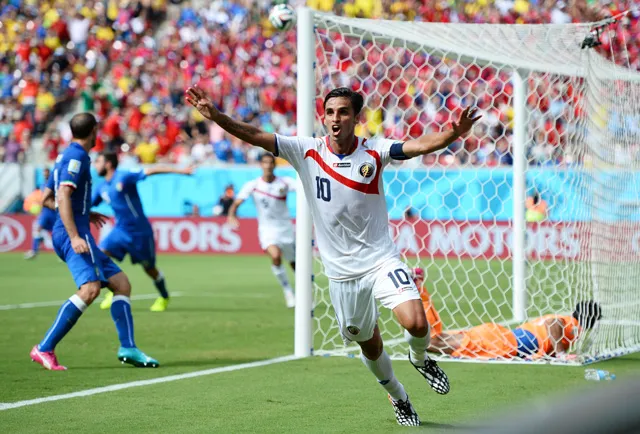
Costa Rica’s 2014 World Cup campaign turned a supposed Group of Death into a showcase of disciplined defending, sharp transitions, and collective belief that viewers could see every time the team stepped on the pitch. They topped a group containing Uruguay, Italy, and England before pushing the Netherlands to a penalty shoot-out, and much of that success was evident in their structure and decision-making in real time, not only in the results. Understanding how those traits appeared on screen helps modern fans read similar surprise runs more clearly when big tournaments come around.
Why Costa Rica’s 2014 Run Reframed Underdog Football
Before Brazil 2014, Costa Rica were widely expected to finish bottom of Group D, a pool loaded with former world champions and framed as one of the tournament’s most difficult draws. Their progression from outsiders to group winners challenged assumptions about what CONCACAF teams could do against European and South American giants when armed with a coherent game plan. For live viewers, each match against Uruguay, Italy, and England became a case study in how a well-drilled side can control risk, manage space, and turn limited possession into high-impact moments.
This shift matters because it gave fans new reference points for evaluating future “minnows” in tough groups. Instead of assuming that a lesser-known squad will collapse under pressure, you can now look at Costa Rica 2014 and ask whether an underdog is showing similar signs of organization, resilience, and clarity in transitions. When you recognize those traits early, each upset feels less like a miracle and more like the logical extension of visible patterns on the pitch.
Group D: Compact Blocks and Clinical Transitions Against Giants
In the opening match against Uruguay, Costa Rica’s shape and intensity immediately hinted that they were not there to merely survive. They defended in a compact block, narrowing the central lanes, and looked to break quickly when they recovered the ball, eventually turning a 1–0 deficit into a 3–1 victory that stunned neutral viewers. You could see forwards and wide players spring into space the moment possession turned over, turning Uruguay’s defensive line and forcing them to retreat toward their own box.
The 1–0 win over Italy amplified those impressions. Costa Rica again stayed compact without the ball, but they also showed confidence in possession, using patient build-up and well-timed runs from Bryan Ruiz and others to exploit spaces between Italy’s back line and midfield. From a live viewing perspective, the pattern was clear: they were not just clearing their lines; they were choosing moments to step forward, compressing the field when defending and stretching it quickly when attacking.
The England Draw: How Control Can Look Different From Possession
By the time they faced England, Costa Rica had already qualified, but their 0–0 draw still offered tactical signals worth watching. England saw more of the ball, yet Costa Rica’s defensive spacing and line management made many attacks look sterile, with much of the play in front of a well-organized block. On screen, you could see Costa Rican defenders stepping out at the right moments to cut passing lanes and midfielders tracking runners without being dragged out of position.
For viewers, this match highlighted how control in modern football often comes from where you allow the opponent to have the ball rather than from possession share alone. Costa Rica seemed content to let England circulate passes in non-threatening zones while remaining compact around the box, making clearances and interceptions look routine rather than desperate. That kind of composed defending is a key signal that an underdog’s earlier upsets are grounded in structure rather than luck.
What Watching Costa Rica Live Shows About Low-Block Variations ดูบอลสด
When you ดูบอลสด matches involving a team like Costa Rica 2014, spotting subtle details within their defensive block can change how you interpret the entire contest. Instead of seeing a generic “parked bus,” you notice how the back line and midfield move in unison, how the nearest midfielder steps to the ball while teammates cover behind, and how quickly wide players drop to create a temporary back five against switches of play. Over 90 minutes, those coordinated shifts tell you this is a rehearsed scheme, not just eleven players camped deep, and that recognition makes it easier to separate truly resilient defending from mere survival when you watch similar teams in future tournaments.
Quarter-Final vs Netherlands: Managing Suffering and Margins
The goalless quarter-final with the Netherlands, which ended in a 4–3 penalty shoot-out defeat, was perhaps the clearest example of Costa Rica’s capacity to “suffer well” without losing their structure. The Dutch dominated territory and chances at times, yet Costa Rica kept their lines compact, protected the central zone, and relied on Keylor Navas’ outstanding goalkeeping to survive waves of pressure. To live viewers, the pattern was one of controlled emergency: last-ditch blocks and saves, but rarely total positional chaos.
Across regular time and extra time, you could see Costa Rican players constantly adjusting their distances, checking shoulders, and communicating as they shuffled across the pitch to meet crosses and cutbacks. Even when the Netherlands introduced fresh attackers and changed penalty goalkeepers late in the game, Costa Rica remained mentally present, taking the tie all the way to spot-kicks. That ability to endure long spells under pressure without collapsing is a key trait to look for when assessing whether an underdog’s defensive plan is sustainable.
A Simple Live-Match Checklist Inspired by Costa Rica 2014
Costa Rica’s World Cup run provides a practical template for how viewers can assess defensive-minded underdogs in real time. The sequence below focuses on what to watch rather than what to expect from the final score.
- Track defensive distances between lines during the first 20 minutes—do they stay compact, or are there large gaps for opponents to exploit.
- Note how quickly wide players and full-backs recover into shape after losing the ball, especially against teams that attack through the wings.
- Observe whether clearances are random or aimed toward specific zones or runners who can hold the ball and launch counters.
- Watch how the team behaves after going ahead or falling behind—do they maintain their structure or start chasing the ball.
- In the final 15 minutes, check if the block remains organized or if fatigue leads to untracked runners and late-arriving midfielders.
If you apply this checklist to Costa Rica’s games against Italy and the Netherlands, you see a side that consistently maintains line distances, resets shape after transitions, and rarely panics when clearing their lines. That repeatability across different opponents is what separates a well-coached defensive run from a one-off upset, and using these checkpoints during live matches helps you identify similar stories as they unfold.
Key 2014 Matches and What Viewers Could See
The table below summarizes the most important tactical impressions from Costa Rica’s standout matches in Brazil, focusing on traits that were visible on broadcast rather than only in post-tournament analysis.
| Match (2014 World Cup) | Result & Stage | Defensive Shape Seen Live | Transition & Attacking Pattern On Screen | Key Viewing Takeaway |
| vs Uruguay (Group D) | 3–1 Costa Rica win, group opener | Compact block, central congestion, aggressive stepping out | Fast breaks into channels, runners attacking space behind | Underdog willing to defend deep but counter with intent |
| vs Italy (Group D) | 1–0 Costa Rica win, decisive group game | Tight lines, careful pressing on triggers, strong box protection | Timed forward runs, crosses and cutbacks toward Ruiz | Defensive solidity paired with confident, planned attacks |
| vs England (Group D) | 0–0 draw, group closer, Costa Rica top group | Organized mid-to-deep block, forcing wide circulation | Occasional counters, more focus on game management | Control achieved by steering play into low-threat zones |
| vs Netherlands (Quarter-final) | 0–0 AET, 4–3 loss on penalties | Very deep compact block, intensive box defending | Limited but purposeful counters, reliance on Navas in transitions | Demonstration of how to “suffer well” without losing shape |
For viewers, laying out matches like this turns a romantic narrative into a structured learning tool. The next time a small nation frustrates a heavyweight in a major tournament, you can mentally populate a similar table as the game progresses, tracking shape, transitions, and game management instead of relying only on the final result or post-match commentary.
Comparing Costa Rica 2014 to Later Compact Defenders
Costa Rica’s 2014 blueprint has since echoed in other international sides that lean on disciplined low or mid-blocks and quick breaks. Their combination of a standout goalkeeper, organized back line, and self-aware attacking plan became a template for teams that cannot dominate possession but want to control the match’s terms.
When you watch similar teams in later tournaments, you can compare them to Costa Rica by asking how consistently they protect central zones, how often their counters carry a clear structure, and whether they maintain defensive standards across multiple games. If the answers resemble what you saw from Costa Rica in Brazil, there is a good chance the underdog’s success is built on replicable principles rather than a short-lived streak of fortune.
Summary
Costa Rica’s 2014 World Cup surprise was constructed on clear, observable foundations: compact defending, intelligent transitions, and calm game management across a series of high-pressure matches. Their performances against Uruguay, Italy, England, and the Netherlands showed live viewers how an underdog can dictate the terms of a game without dominating the ดูบอลสดวันนี้ changy, simply by controlling space, timing, and defensive discipline. For fans watching future tournaments, using Costa Rica 2014 as a lens encourages a more tactical reading of surprise runs, centered on visible structures and repeatable patterns rather than just the shock value of the final scorelines.