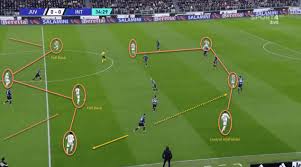
If you only look at full‑time scores, you miss half of what matters in Serie A. Across the 2021/22 season, goal timing patterns and half‑specific tables showed that Italian matches often unfolded in two distinct phases, with roughly 43% of goals arriving in the first half and 57% in the second. Once you understand which teams start fast, which grow into games, and when goals typically cluster, you can stop treating 1st‑half and 2nd‑half bets as side entertainment and start using them as targeted tools.
Why splitting matches into halves actually improves betting logic
Dividing a match into halves turns a single binary event into two separate processes with their own rhythms. Half-time league tables for Italy show that the “table after 45 minutes” looks different from the full-season ranking, indicating that some teams led more often early but dropped points later, while others were slow starters who regularly turned matches around after the break. At the same time, goal distribution data across 2021/22 reveals that more goals arrived after half-time than before, and that the final ten minutes (81–90) accounted for the single most productive scoring window.
For bettors, the cause–effect path is clear. Tactical caution, physical freshness and scouting-driven preparation tend to dominate early phases, keeping some games tight in the first 45 minutes. In the second half, fatigue, substitutions and scoreline pressure increase both space and risk-taking, nudging totals upward. By aligning your bets with the teams and situations that historically fit those patterns, you make more specific claims—“this side starts well but fades” or “this match tends to explode late”—instead of vague beliefs about full‑time outcomes.
What Serie A 2021/22 data reveals about goals by half
Half-time and second-half stat tables for Serie A show that total goals per game in the second half were higher than in the first, with some teams particularly prone to late scoring. Aggregated trends referenced in betting analyses of the 2021/22 campaign note that, across the season, around 43% of goals came in the first half and about 57% after the interval, with a notable spike in the closing ten minutes. Match total-goals stats by half also highlight specific clubs—Genoa, Juventus, Sassuolo, Roma and others—as frequent contributors to second-half goals, with average second-half totals around or above 1.4 goals in many of their games.
These patterns are not random. Second halves combine accumulated fatigue, tactical adjustments and scoreline-driven urgency. Teams chasing the game commit more players forward, while leading sides either drop deeper (inviting pressure and counter attacks) or exploit space on the break. The result is a structurally different environment compared with the opening 45 minutes, which should be reflected in how you price over/under 0.5 or 1.5 goals by half, and how much risk you are willing to accept in HT‑specific bets.
How first‑half tables change your view of certain teams
Half-time league tables, which show how the standings would look if matches ended at 45 minutes, add another layer of nuance. In many competitions—including Italy—these tables reveal that some teams led frequently at the break but failed to convert those advantages into full points, while others drew or trailed early but consistently improved in the second half. Second-half tables, built from results after the break, often flip the picture for clubs known for strong fitness or impactful substitutions.
From a betting angle, this difference creates distinct roles for first‑half and second‑half markets. Teams that are structurally better prepared and tactically clear often start sharply, making them more appealing for 1st‑half moneyline or draw‑no‑bet positions when facing weaker opposition. Sides that rely on pressing intensity or bench depth may be more attractive in “2nd half result” or “team to score in second half” markets, especially when facing opponents with thinner squads. The impact is that you stop overgeneralising from full‑time tables and tailor your bets to the part of the game where each team really excels.
Reading goal-timing patterns for practical bets
It is easy to memorise that “more goals come in the second half,” but you gain an edge only when you connect that fact to specific markets and match contexts. Goal‑by‑minute analyses for Serie A 2021/22 indicate that the final ten minutes (81–90) represented the single richest scoring band, while first halves saw more conservative patterns with fewer explosive spikes. Second-half goal stats, by team, show that certain clubs generated or conceded an outsized share of their goals after the break, reinforcing the idea of “late-action” identities.
For bettors, this supports three practical ideas. First, in-play and pre‑match bets on “goal in last 15 minutes” or “team to score in the second half” make more sense when involving sides flagged by those tables as high second-half scorers or leaky late defenders. Second, early unders (under 1.5 first-half goals) can be more attractive in matches between tactically cautious teams with histories of low early scoring. Third, HT/FT bets that assume a specific script—favourite to draw at half-time, win full‑time, for example—work best when they align with the observed pattern of slow starts and stronger finishes.
Mechanisms behind different first‑half and second‑half behaviours
Underneath the numbers are repeatable mechanisms. Teams that approach games with early caution often prioritise compactness and risk management in the first 20–30 minutes, using this time to read the opponent and avoid conceding first. That naturally depresses first-half goal volume. Clubs with strong conditioning, deep benches and flexible tactical plans, on the other hand, can ramp up intensity and introduce fresh legs in the second half, especially after identifying specific weaknesses to target.
When half‑time statistics can mislead bettors
However, half‑by‑half stats can mislead if you ignore context. A club might show high second-half scoring because it spent much of the season chasing deficits, inflating late goals that reflect desperation rather than a stable attacking plan. Another team’s low first-half goals could come from a run of fixtures where opponents sat very deep, not from a universally cautious approach. Small sample sizes—over a dozen games, for example—can also distort patterns. Without connecting numbers to tactical reality, you risk betting on “late goals” in matches where both sides are content with a draw.
An applied checklist for using first‑half and second‑half stats
To use 2021/22 half‑time data constructively, you need a short checklist that keeps you from overreacting to a single trend. Public half‑time and second-half tables for Serie A provide all the raw metrics—goals by half, half‑time results, and second-half performance—that you need to structure such a routine.
A practical sequence might be:
- Profile both teams by half
Check the half‑time and second-half tables to see how often each side leads, draws or trails at the break, and how their goal counts split between first and second halves over a meaningful sample. - Align patterns with tactics and stakes
Link those patterns to the teams’ tactical identities and the match context—title race, relegation battle, or mid‑table freedom—to decide whether they are likely to repeat or shift behaviour in this specific fixture. - Choose markets that express the half‑specific edge
Decide whether your insight points towards 1st‑half result, 2nd‑half result, over/under by half, or late‑goal specials, and adjust stake size based on how many independent factors support your hypothesis.
By following this sequence, you move from raw stats (“Team X scores more in the second half”) to actionable hypotheses (“In a high-stakes match where they usually grow into games, backing them on the 2nd‑half draw‑no‑bet or a late‑goal market makes more sense than taking them outright from the start”).
Where half‑time data meets your betting environment
Once your half‑time analysis points toward a particular angle—under 1.5 goals in the first half, a second-half win for a fitter side, or a focus on late goals—the final step is identifying the right market and price. At that point, the quality of your decision depends less on where you click and more on how clearly your bet matches your reasoning. After you have used 2021/22 data to decide that a Serie A match deserves a half‑specific approach, an online betting site like ufabet เข้าสู่ระบบ becomes simply the infrastructure where you map that view onto concrete options: 1st‑half handicaps, 2nd‑half goal lines, or HT/FT outcomes. Keeping the analytical logic separate from on-screen prompts or quick-pick suggestions preserves the integrity of your half‑time framework.
Keeping half‑time stat discipline apart from casino impulses
Using first‑half and second‑half stats well demands patience. You wait for kick‑off, observe whether the match follows expected patterns, and sometimes accept that good reads still lose in single-game samples. In integrated gambling environments where sports markets live alongside a broader casino online offer, that patience can erode if you regularly switch into high‑variance, short‑cycle games. The emotional swings from those activities can tempt you to chase “late goal” bets that do not truly fit your Serie A models or to abandon good half‑time strategies after a few unlucky outcomes.
To keep your half‑time analysis effective, it helps to treat it as a separate, trackable project. You record bets tied explicitly to first‑half and second‑half stats, monitor long-run results, and adjust your criteria only when the data from many matches justifies it. Any unrelated casino play is ring‑fenced with its own bankroll and expectations. Over time, this separation lets you see whether your use of 2021/22 half‑time and second‑half information is genuinely adding value to your Serie A betting, instead of being drowned out by noise from other forms of gambling.
Summary
Splitting Serie A 2021/22 into first halves and second halves uncovers patterns you never see in the full‑time table. League-wide, around 57% of goals arrived after half‑time, with the final ten minutes particularly rich, while half‑time and second-half tables showed that some teams consistently started fast and others finished strong. By profiling clubs with these stats, linking them to tactics and stakes, and choosing markets that target specific parts of the game, you turn half‑time data from trivia into a structured tool for building sharper, more context‑aware bets.