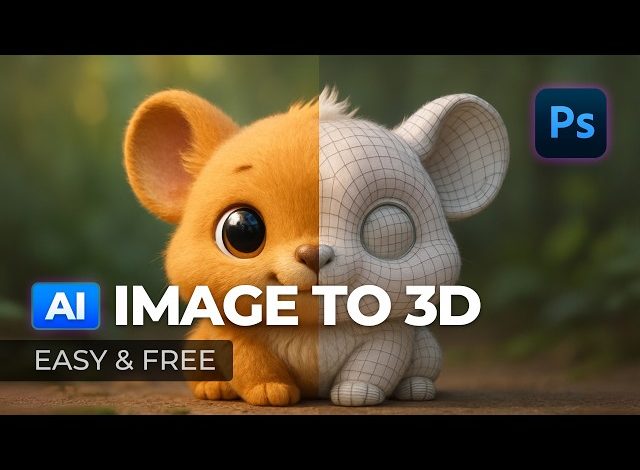
Artificial intelligence is changing how designers, creators, and businesses build 3D content. Today, you no longer need advanced modeling skills or expensive software to create detailed 3D objects. With modern AI platforms, it is now possible to generate realistic 3D assets using just a single photo. This process, often searched as “image to 3d model online,” is becoming one of the fastest-growing trends in digital design because it saves time, reduces costs, and makes creativity more accessible.
In this article, we will explore how this technology works, why it matters, and how tools like Modelfy are shaping the future of AI-powered 3D generation. Whether you are a designer, developer, marketer, or beginner exploring 3D content, understanding how image-to-3D conversion works can help you unlock powerful new workflows. The goal is to break down complex ideas into simple terms so you can see how this innovation fits into real-world use cases.
How AI Transforms a Single Image into 3D Models
The idea behind image to 3d model online tools is simple but powerful. AI systems analyze a flat image and predict depth, shape, texture, and structure to build a full 3D object. Instead of manually sculpting every detail, the system uses trained models to understand how real-world objects look from different angles and reconstruct them digitally. This process combines computer vision, neural networks, and generative modeling to turn 2D visuals into spatial 3D representations.
Modern platforms like Modelfy take this a step further by offering automated pipelines where users upload an image and receive a usable 3D model in minutes. The system interprets lighting, edges, and object geometry to generate realistic outputs that can be used in gaming, animation, product visualization, and AR/VR experiences. This eliminates the traditional learning curve and opens doors for people who have never worked with 3D software before.
Why Image to 3D Model Online Tools Are Changing Design Workflows
Traditional 3D modeling often requires hours or even days of manual work. Artists must sculpt, texture, and refine models using complex software. However, image to 3d model online solutions are reshaping this workflow by reducing production time dramatically. Instead of building from scratch, creators can now start with a reference image and instantly generate a base model that can be refined or exported.
This shift is especially valuable in industries like e-commerce, gaming, architecture, and advertising. Businesses can quickly turn product photos into interactive 3D visuals, improving customer engagement and decision-making. Platforms such as Modelfy make this process even more efficient by providing AI-driven automation that handles most of the technical work. As a result, teams can focus more on creativity and storytelling rather than technical modeling challenges.
Key Benefits of Using AI-Based 3D Conversion Platforms
One of the biggest advantages of using image to 3d model online tools is accessibility. You do not need advanced technical skills or expensive hardware to get started. Anyone with an idea and a simple image can create 3D assets that look professional. This democratization of 3D design is helping students, freelancers, and small businesses compete with larger studios.
Another important benefit is speed and scalability. AI-powered tools can generate multiple 3D variations in a short time, which is essential for projects that require rapid iteration. With platforms like Modelfy, users can experiment with different styles, angles, and outputs without restarting the entire modeling process. This flexibility allows for faster decision-making and more creative freedom, especially in fast-paced industries like digital marketing and game development.
Real-World Applications of Image to 3D Model Online Technology
The use of image to 3d model online technology goes far beyond simple design experiments. In e-commerce, businesses can convert product photos into interactive 3D previews, allowing customers to rotate and inspect items before purchasing. This improves user experience and often leads to higher conversion rates. Retailers are increasingly adopting this approach to stand out in competitive markets.
In entertainment and gaming, developers use AI-generated 3D models to speed up asset creation. Instead of spending weeks designing characters or environments, they can generate base models instantly and refine them later. Similarly, in education and architecture, students and professionals can visualize concepts in 3D without needing advanced modeling skills. Tools like Modelfy make these applications more practical by providing reliable, high-quality outputs that can be integrated into different workflows.
The Role of Modelfy in the Future of AI 3D Design
As AI continues to evolve, platforms like Modelfy are playing a key role in shaping the future of digital creation. By focusing on simplicity and automation, they allow users to convert images into usable 3D assets without dealing with complex technical steps. This makes 3D design more approachable for non-experts while still offering powerful results for professionals.
The growing demand for image to 3d model online solutions shows that industries are shifting toward faster, AI-assisted workflows. Modelfy fits into this trend by offering a SaaS-based solution that supports creators at every level. Whether it is for prototyping, visualization, or full-scale production, such platforms are helping bridge the gap between imagination and execution in a way that was not possible a few years ago.
Conclusion
The rise of AI-powered image to 3d model online technology marks a major shift in how digital content is created. What once required advanced skills and long hours of manual work can now be achieved in minutes using intelligent systems. This transformation is not just about convenience; it is about expanding access to creativity and enabling more people to participate in 3D design.
As tools like Modelfy continue to improve, we can expect even more realistic, accurate, and customizable outputs from simple images. The future of 3D modeling is moving toward automation, speed, and accessibility, making it easier than ever for anyone to turn ideas into immersive digital experiences.