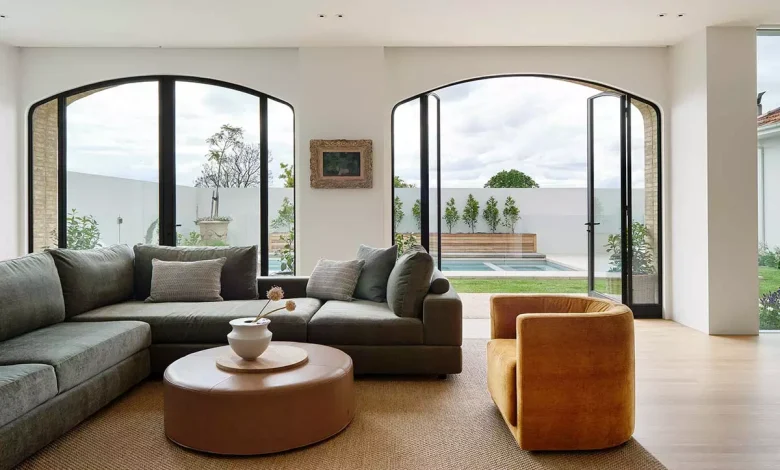
Walk through any furniture showroom today and you’ll find a familiar split: on one side, budget-friendly veneer and laminate pieces built for a few years of use; on the other, solid timber furniture priced higher but built to outlast several house moves. For a room as heavily used as the living room, that split matters more than almost anywhere else in the home.
The living room absorbs more daily wear than any other space. It’s where people sit down after work, where kids climb on the coffee table, where guests perch on the arm of the sofa, and where the TV unit gets bumped every time someone vacuums. Furniture in this room isn’t decorative in the way a hallway console might be — it’s functional, and it gets tested constantly. That’s exactly the kind of environment where the difference between solid timber and composite materials becomes obvious within a year or two.
Why Solid Wood Holds Up Differently
Composite furniture — anything built from particleboard, MDF, or veneer over a cheaper core — relies on glue and surface coating to hold its shape and finish. Both degrade with humidity, heat, and repeated use. A veneer edge can chip and expose the material underneath; a particleboard joint can loosen once it’s been through a few seasons of Australian humidity swings. None of this happens overnight, which is part of the problem: the furniture looks fine in the shop and for the first year at home, then starts failing right around the time most warranties expire.
Solid wood furniture doesn’t have that failure mode. Because the material is consistent all the way through, there’s no surface layer to chip or delaminate. Joinery — dovetails, mortise and tenon joints, screwed and glued frames — is cut into the timber itself rather than fastened to a hollow core, so it holds tension over years of use rather than months. A solid timber console table or bookshelf that’s twenty years old can usually still be sanded back and refinished; a composite equivalent from the same era has almost certainly already been replaced.
The Aesthetic Argument
Durability aside, there’s a design reason solid wood keeps showing up in living room renovations: it ages visually in a way people actually like. Timber darkens and develops grain character over time, particularly hardwoods like oak, mango, and blackwood. That patina is part of what gives a solid wood console table or coffee table a lived-in, considered look rather than the slightly sterile appearance of furniture that’s clearly mass-produced from sheet material. Interior designers frequently point to this as the reason a single well-chosen timber piece can anchor an entire room in a way a matching flat-pack set never quite manages.
There’s also more design flexibility with solid timber. Because the material can be shaped, carved, and finished in more ways than composite boards, furniture makers working in solid wood tend to offer more variation in leg profiles, edge details, and joinery style. For anyone trying to avoid the generic look of big-box furniture, that variety matters.
Weighing Up the Cost
The obvious objection to solid wood is price — it typically costs more upfront than composite alternatives. But the calculation changes once you factor in replacement cycles. A composite TV unit or coffee table bought for a lower price today, then replaced in five to seven years, often ends up costing more over a decade than a solid timber piece bought once and kept indefinitely. That’s before accounting for the environmental cost of the discarded piece, or the hassle of sourcing, delivering, and assembling a replacement.
For buyers furnishing a living room for the long term rather than a short-term rental or a temporary setup, that math tends to favour timber. It’s also worth noting that solid wood furniture holds resale value far better than composite pieces, which are rarely worth listing secondhand once they’ve shown any wear.
What to Look For
Not all “solid wood” claims are equal, so it pays to check specifics before buying. Genuine solid timber construction should be stated clearly by the retailer, not just implied by a “wood” product name that could mean a veneer finish. It’s worth asking what species is used — hardwoods like oak, mango, and blackwood are denser and more durable than softer timbers, and will hold joinery and finish better over time. Joinery type is another useful indicator: look for dovetail or mortise and tenon construction rather than simple screwed butt joints, which are more prone to loosening.
Anyone weighing up options for a living room refresh is generally better served browsing a proper range of solid wood furniture for the living room rather than defaulting to whatever’s cheapest in-store. The upfront spend is higher, but for a room that gets used every single day, it’s furniture that’s built to actually survive the use it’s going to get — and to look better, not worse, for having survived it.
That’s the real case for solid timber: not nostalgia for how furniture used to be made, but a straightforward bet that in the room your household spends the most time in, durability and repairability are worth paying for.
Matching Timber to How a Room Is Actually Used
Choosing solid wood furniture isn’t just a materials decision — it also pays to think about how a living room actually gets used before settling on specific pieces. A household with young children or large pets generally benefits from denser, harder timber species that resist dents and scuffs better than softer woods, along with finishes that are more forgiving of spills and everyday knocks. A quieter, adults-only household has more flexibility to prioritise grain character and finish over sheer durability, since the furniture won’t be absorbing the same level of daily impact.
Room size matters too, in ways that are easy to overlook when furniture shopping online. A large, heavy timber coffee table that looks proportionate in a showroom can dominate a smaller living room in a way that makes the whole space feel cramped, while a delicate, light-framed piece can look undersized and flimsy in a large open-plan living area. It’s worth measuring the actual floor space a piece will occupy, including clearance for walking around it, before committing — solid timber furniture is a long-term purchase, and proportion mistakes are far more noticeable in materials with real visual weight than they are with lighter composite alternatives.
Traffic flow is another practical consideration specific to living rooms. Furniture that will be walked past constantly — console tables behind sofas, side tables near doorways — benefits from rounded or softened edges, both for safety and because sharp square edges tend to show wear at contact points faster than eased or rounded profiles. This is a small detail, but it’s the kind of thing that separates furniture designed by people who understand how living rooms are actually lived in from furniture designed purely to photograph well.
Timber and the Rest of the Room
Solid wood furniture rarely exists in isolation — it sits alongside upholstery, rugs, lighting, and wall treatments, and getting the balance right across all of these elements matters as much as the furniture choice itself. Warm-toned timbers like mango wood and blackwood pair naturally with earthy, textured fabrics — bouclé, linen, wool blends — and with warm neutral wall colours. Cooler or more heavily grained timbers can sit well against more contemporary palettes, provided the rest of the room doesn’t compete too heavily with the timber’s natural pattern.
Lighting also changes how solid wood reads in a room. Warm, low-temperature lighting tends to bring out the richness in darker timbers, while cooler, brighter lighting can wash out that same richness and make a piece look flatter than it does in natural daylight. Anyone furnishing a living room around a statement timber piece is generally better off testing lighting at different times of day before finalising a layout, since a console table or media unit that looks perfect in afternoon light can read quite differently under evening lamp light.
A Note on Provenance and Craftsmanship
Increasingly, buyers are asking not just what a piece of furniture is made from, but how and where it was made. This matters for solid wood furniture specifically because the gap between well-constructed and poorly constructed timber pieces is larger than it is for most composite furniture — a badly joined timber frame can fail in ways a simple screwed particleboard frame won’t, precisely because timber moves and settles over time in ways that construction quality either accounts for or doesn’t.
Retailers and makers who are transparent about timber sourcing, construction methods, and finishing processes are generally a safer bet than listings that simply describe a piece as “solid wood” without further detail. Details worth asking about include the specific timber species, whether the piece is kiln-dried to the appropriate moisture content for local conditions, and what type of joinery has been used at load-bearing points. These aren’t questions that occur to most first-time buyers, but they’re exactly the questions that separate a piece that will still be structurally sound in fifteen years from one that starts loosening within three.
Living With Solid Wood: Maintenance That Actually Pays Off
One underrated advantage of solid timber is how little specialised care it needs to stay looking good. A light dusting and an occasional wipe with a damp cloth handles most day-to-day upkeep. Beyond that, an annual application of timber oil or wax on exposed surfaces is usually enough to keep the finish protected and the grain looking rich rather than dull. Compare that to laminate or veneer furniture, which can’t really be restored once the surface is damaged — a chip or a burn mark on veneer is permanent, while the same mark on solid timber can often be sanded out and refinished so it disappears entirely.
That reparability is worth dwelling on, because it changes how people relate to their furniture. A composite piece with a scratch or water ring is, in practical terms, furniture with a permanent flaw — the kind of thing that eventually pushes a household toward replacing it rather than living with it. A solid timber equivalent with the same mark is simply a piece that needs an afternoon of light sanding and a fresh coat of oil. That’s a fundamentally different ownership experience, and it’s a big part of why timber furniture gets kept, restored, and handed down rather than discarded.
Humidity is the other factor worth understanding, particularly in Australian climates that swing between dry inland heat and humid coastal conditions. Well-made solid timber furniture is kiln-dried and finished specifically to manage seasonal movement, so while very minor expansion and contraction is normal, it shouldn’t cause structural problems in a well-constructed piece. This is another area where build quality matters — furniture from a maker who understands local conditions and sources appropriately dried timber will perform far better over a decade than something rushed to market.
The Long View
Furniture bought for a living room tends to outlast most other purchasing decisions made in a home — it’s rarely replaced on the same cycle as soft furnishings, paint colours, or even flooring. That longevity is precisely why the material decision at the outset carries so much weight. Composite furniture optimises for a lower price today; solid timber optimises for a lower total cost, better appearance over time, and less landfill waste across the lifespan of the room. For most households furnishing a space they intend to live in for years rather than months, that’s a trade worth making.